Project
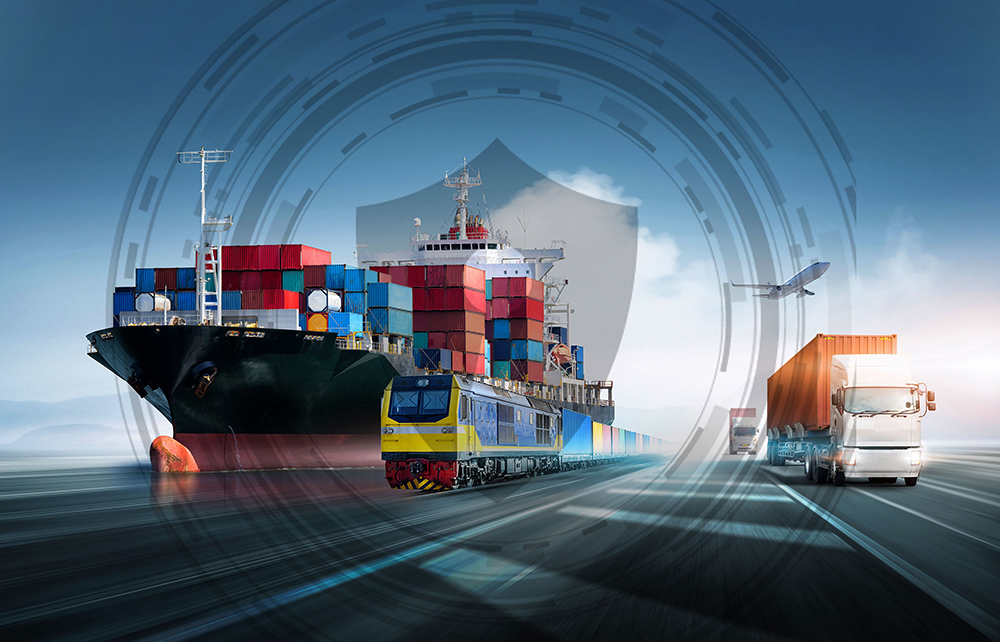
The transport network is a crucial component of Critical Infrastructures (CIs), which are essential for the continuous operation and maintenance of logistics and the single market. EU policy has facilitated the development of an interconnected and easily accessible TEN-T transport network, which, however, also increases the risk of disruptions or damage.
The EU-funded TRANSCEND project (Transport Resilience against Cyber and Non-Cyber Events to prevent Network Disruption) aims to equip freight transport operators with an integrated set of tools, guidelines and technological solutions to enhance protection, reduce risk and improve resilience to various threats, both physical and cyber.
To this end, the project will provide a digital platform (Control Tower) for monitoring and increasing the visibility of threats and risks, and will develop 5 real-world pilot implementations, divided into 3 mains: the airport pilot in Luxembourg, the rail-road terminal pilot in Bologna, Italy and the trimodal port pilot implementation in Spain; and 2 transferability demonstrators: the fluvial port of Budapest and the Egnatia’s highways in Greece.
Project mission
The overarching objective of TRANSCEND is to provide freight transport critical infrastructure operators with an integrated set of advanced tools, guidelines and technological solutions to reduce risk, and enhance the protection and resilience of their critical infrastructure and interrelated critical infrastructures against physical, cyber and hybrid threats.
Project solution
The contributions will be integrated into a Control Tower, a digital platform with embedded business intelligence giving stakeholders a shared and continuous visibility of threats and risks by breaking down silos within and between organizations. To demonstrate the effectiveness of the approach, five diverse CIs will experiment with methodological and technological solutions as pilots: three leaders and two followers.
Project objectives
Provide an integrated set of advanced tools, guidelines and technological solutions to reduce risk, and enhance the protection and resilience of their critical infrastructure and interrelated critical infrastructures against physical, cyber and hybrid threats.
- Improve knowledge of the threat landscape in the freight transport sector, particularly emerging threats in a VUCA world
- Improve knowledge of CI vulnerability in a large-scale interconnected system modelling interdependencies and domino effects
- Enhance the early detection of threats and incidents
- Develop operational procedures to reinforce resilience
- Implement security measures and tools to build resilience
- Operational testing in real scenarios or realistic simulations of scenarios
- Strengthen cooperation at different levels
Project expected results
- IDENTIFIED VULNERABILITIES AND RISKS: To define mitigation strategies and improve capacity to prevent, resist, absorb and recover from disruptive incidents; threat landscape reference document; vulnerability assessment; resilience assessment; process mining analysis; strengthened cooperation.
- POLICIES AND PROCEDURES: Guidelines for a resilience plan; resilience plan for each pilot; security operational procedures; Inputs for a national risk assessment and resilience strategy.
- TECHNOLOGICAL SOLUTIONS: To support the implementation of policies and plans for cost-effective risk reduction and resilience; machine-readable threat modelling for large-scale simulations; state-of-the-art analysis of physical and cyber detection technologies; ML/AI-based predictive models and algorithms to detect early signs of disruption; Experimentation of detection technologies; generic TRANSCEND Control Tower.
- REAL WORLDS PILOTS: To demonstrate the impacts of the TRANSCEND solutions to the freight transport sector; to secure cargo integrity; to coordinate capacities between CIs at the regional level; to monitor security incidents in multimodal transport; concept for testing human behaviour and procedures in realistic attack scenarios.
Target communities
- Critical Infrastructures
- The CI ecosystem includes freight operators, supply chain actors (manufacturers, shippers and cargo owners) and other interconnected operators (e.g. energy providers, emergency services and telecommunication providers).
- Regulators and competent authorities in charge of the national transposition and application of CER and NIS-2 directives.
- Research community and technology providers in the field of freight transport and security.