On 29-30 April 2025, TRANSCEND proudly participated in the 3rd European Cluster for Securing Critical Infrastructures (ECSCI) Workshop. The event took place in Bilbao, Spain, and showcased speakers from 13 EU-funded projects selected out of more than 50 projects participating in the ECSCI cluster.
Oliver Seiffarth from DG HOME – F2-Innovation and Security Research / CERIS opened the workshop with a detailed discussion on the EU’s strategic approach to security research, emphasizing CERIS’s role in fostering sector-wide collaboration, and the EUCCS challenges, objectives, and scope. The CER and NIS2 directives were also showed as well as the all-hazards approach.
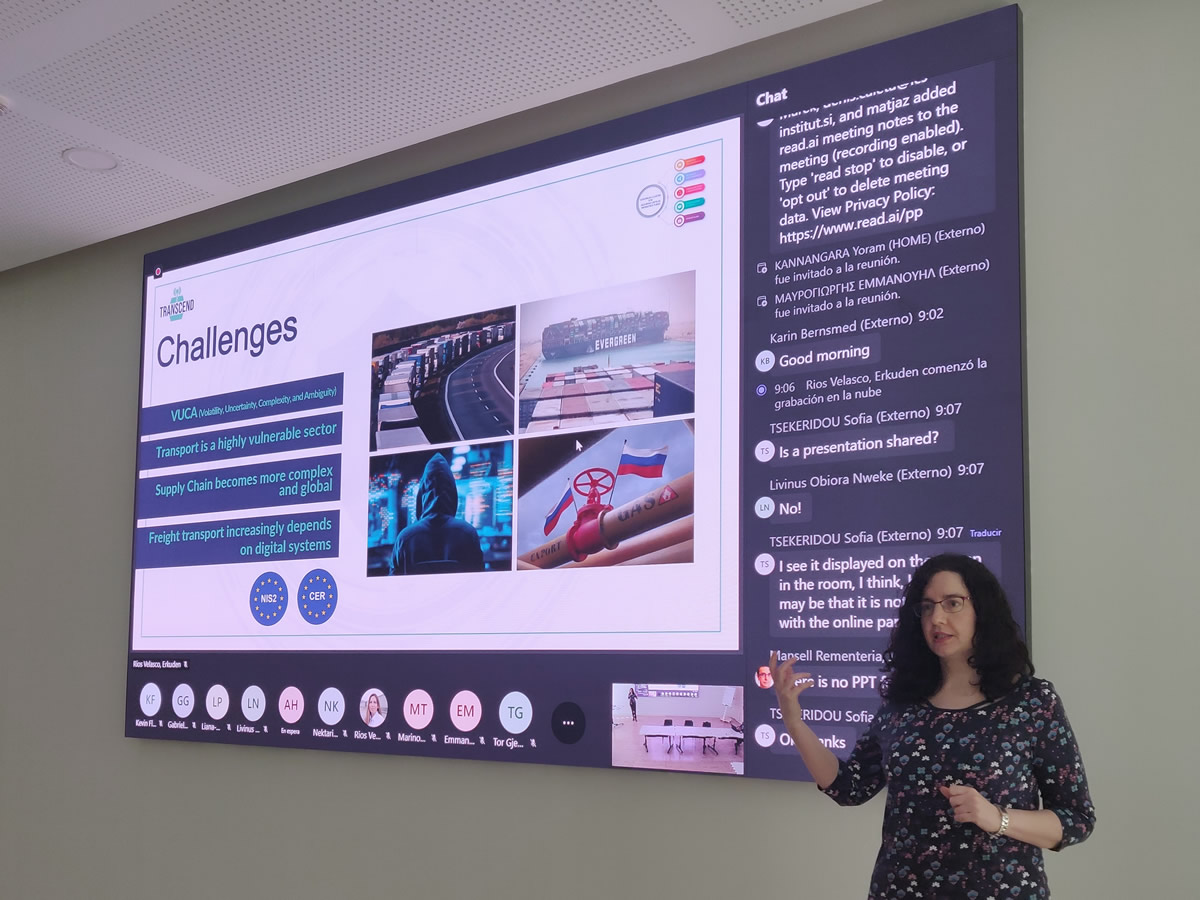
Among the speakers, Carolina Cipres from Zaragoza Logistics Centre presented to the participants the main objectives of the TRANSCEND project and its contribution to foster resilience of European critical infrastructure against cyber and non-cyber threats.
As the workshop took place during the blackout in Spain early that week, it soon became a common topic throughout all the presentations, as it affected critical infrastructures from energy, transport and telecommunications sectors. It made very topical for the participants the need to work towards a more resilient critical infrastructure ecosystem.
A huge thank from the TRANSCEND project to the European Cluster for Securing Critical Infrastructures for the opportunity to share invaluable insights and knowledge in the field of critical infrastructure. We look forward to joining other thrilling initiatives promotes by the cluster!